

A pet project is, first of all, a way to learn something new in your own field. I have a 9–5 job, but I almost always work on some side projects as well. The difference is that until now I had never actually brought one to the App Store like my current app — Irregular German Verbs. Why did I finish this one? And why exactly this topic?
Thanks to my wife — a university German language teacher with 25 years of experience. She clearly understood which topic should become a standalone app and how exactly it should be presented. The app is based on my wife’s educational ideas, and the app itself clearly states whose educational methodology it is based on.
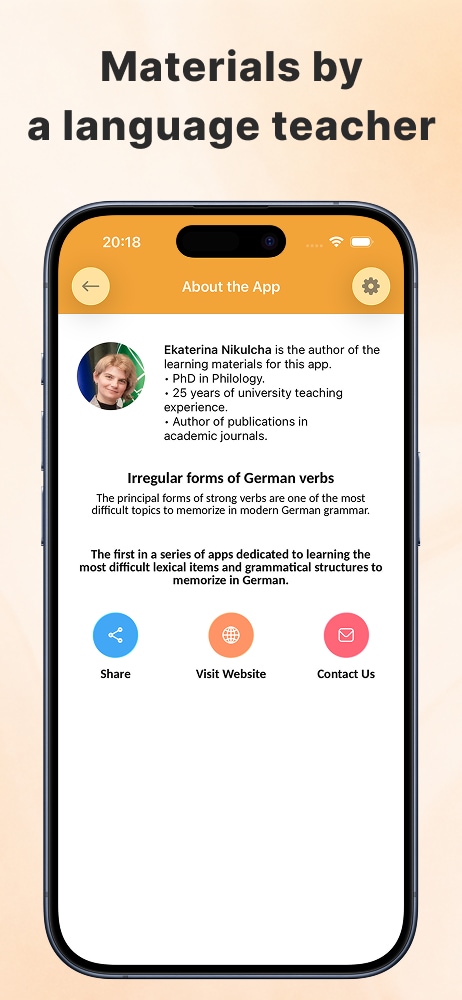
You can find the full list of product decisions on the product page. In this article, I want to explain why these particular decisions were made.
One problem, One tool
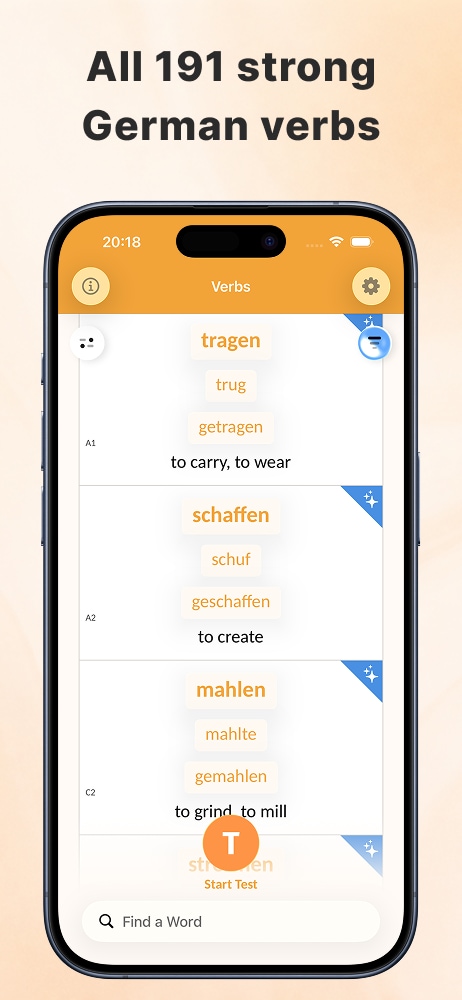
Irregular German Verbs is a very narrow topic. The app contains only 191 verbs that simply have to be memorised. At first glance, it may seem more logical to build something larger and more universal. We discussed that option as well. But when I suggested making something bigger, I received a categorical “no”. And the reasons were purely educational:
- this topic should not be mixed with any other;
- Irregular German Verbs is difficult because these verbs simply need to be memorised — there are no rules here;
- a proper memorisation system is required, a simple table is not enough.
That is exactly the approach I started development with.
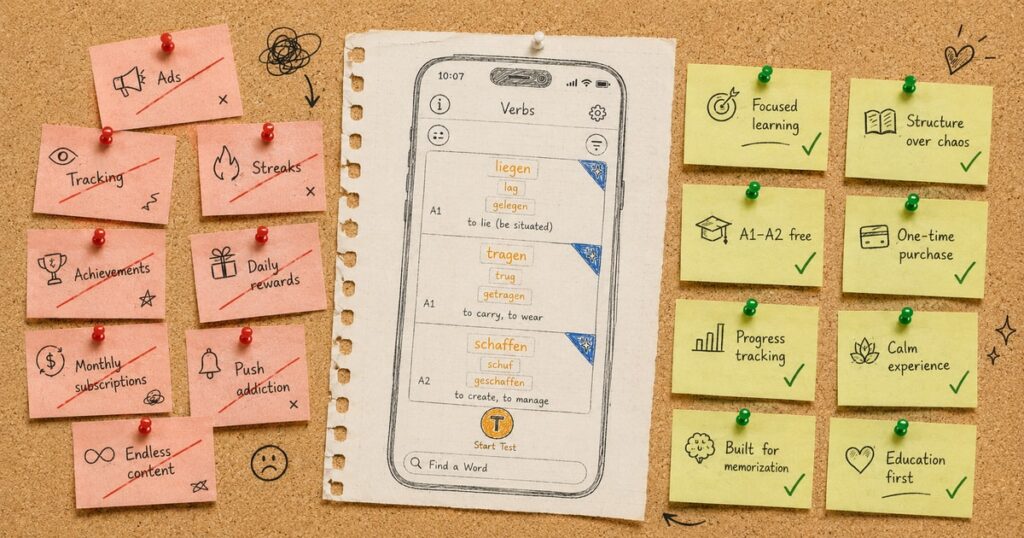
No ads, No tracking, No subscriptions
Learning requires concentration. Ads and tracking create unnecessary distraction and stress. As a developer, I tried to argue for ads a little. But my wife, as a teacher, responded with a very clear “no”. When she teaches students, distractions are not acceptable.
And when it comes to subscriptions, I personally dislike them as well and try to avoid them whenever possible. If translated into the educational process, this app should feel more like buying a book: you pay once and continue using it peacefully afterwards. Which feels honest and familiar for students.
Free A1-A2
The app includes a decision that is not very obvious and definitely not very profitable for a developer — A1-A2 levels are completely free. And that is basically one third of all verbs in the app. But this decision also comes from educational principles. Everyone learns differently:
- some people prefer video;
- some prefer audio;
- some prefer books.
A student should be able to calmly try the material and understand whether this format works for them.
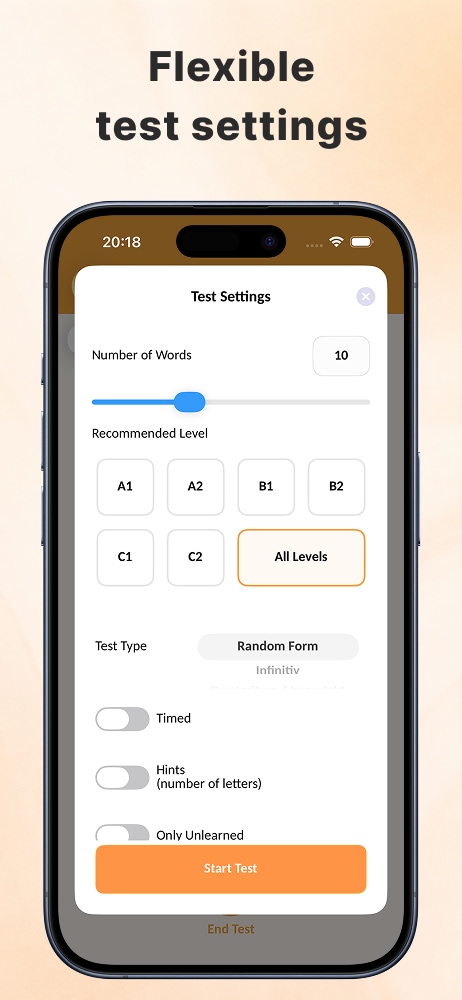
A1-A2 levels are designed specifically for beginners learning German. If a student decides to continue further, unlocking all verbs requires a one-time $2.99 purchase, which is a very reasonable price for educational material of this level.
After the purchase, all learning levels and extended testing options become available.
No aggressive gamification
I am a native iOS developer, but my background is strongly connected to games. Naturally, I know Game Center very well, and almost immediately I suggested adding gamification features:
- achievements;
- visit streaks;
- different progress rewards.
At one point I even suggested implementing streaks without Game Center.
But none of these ideas passed the teacher’s approval. All of this distracts from a difficult topic and serious educational material. That is why the app only includes progress tracking — simply as statistics for the student. Nothing more.
Code and architectural decisions
For me, a pet project is also a great opportunity to learn something new, build a clean architecture, and experiment with code. At the same time, I have a regular 9–5 job, so I can dedicate maybe a couple of hours per day to the project, and not even every day. Sometimes the main job simply wins.
Taking all of this into account, the project took 2 years to develop. For an app like this, that is still quite a long time. But as a developer, I am happy with:
- the architecture;
- the code;
- and the knowledge I gained during development.
What’s next
During development, we barely looked at competitors. This is a specific educational system created by a specific teacher — Ecaterina Niculchea. So for us, it was not that important what other apps were doing. After releasing the app, we finally decided to take a closer look at competitors — and honestly, we were very happy with our own solution.
In any case, what I released was an MVP. Even before release, I already had a long list of ideas: interface improvements, new settings, testing improvements, and overall UX polishing. All of these are new and interesting product decisions for the future development of the app.
I also noticed some interesting ideas in competitor apps — and that is completely normal. So the next step is gradual improvement and polishing the product as much as possible. After that, I will probably try submitting it for an App Store feature. I hope the product will be strong enough for that by then.
One of the strategic product design decisions was the desire to gradually polish the app and bring the project to the best possible state. This is exactly what I am working on now, and almost every new update brings new product decisions.