
We had wanted to visit Pompeii for a long time. We knew what kind of city it was, how it had been preserved, and what had happened there. We read books about the excavations, and I had separately watched Pink Floyd’s concert in Pompeii. There is a lot of information about this ancient city, but here I want to describe our subjective impressions.
Even after all the preparation, we were still not ready for what we saw and felt. It is a shift in time, an awareness of the power of nature, and a sense of connection between different eras. But let’s go step by step.
Modern and ancient spectacle
When entering the archaeological park, one of the first structures you encounter is the Pompeii amphitheater. The principle of “bread and circuses” has always worked, but in Pompeii the connection between ancient and modern spectacle is especially noticeable.
In ancient times, gladiator fights, races, and theatrical performances took place here. People entertained themselves in the ways available to them. Today we also enjoy spectacles — without blood, of course.
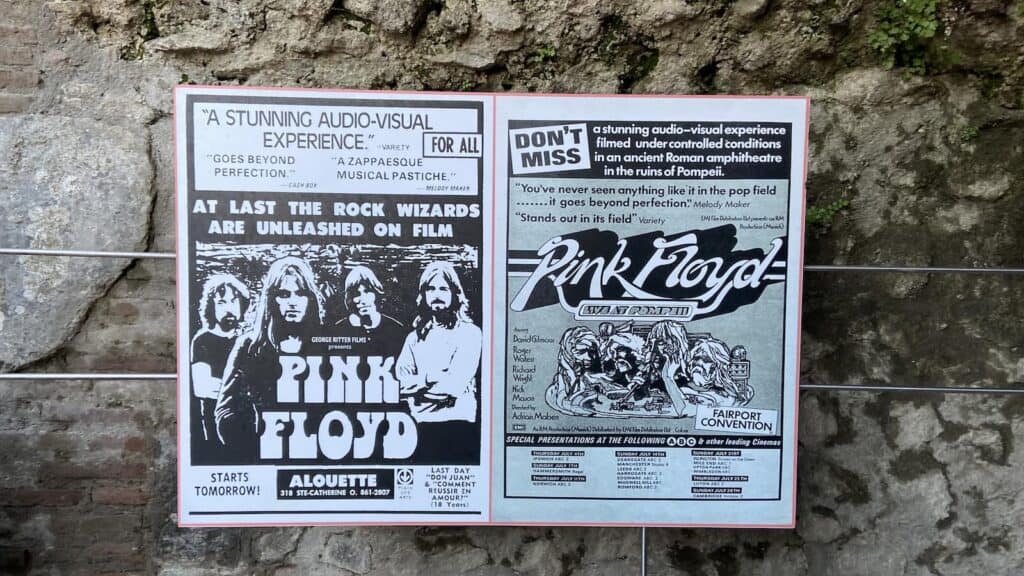
It was in this amphitheater that Pink Floyd recorded their concert film in 1971. In my view, they were the perfect band to connect different eras. Apparently, the curators of the archaeological park share this view as well — there is an exhibition dedicated to Pink Floyd inside the ancient amphitheater of Pompeii.
A shift in historical context
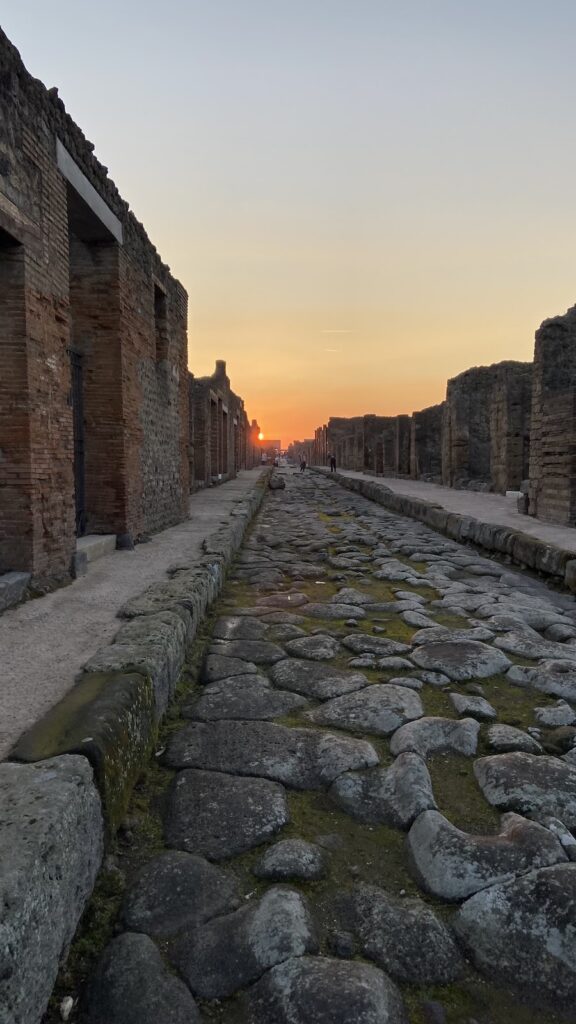
From the amphitheater, you can walk in any direction, and we immediately stepped onto the city’s main street. It is a truly powerful experience — a journey through time without any imaginary devices. Tourists do not ruin the feeling; on the contrary, their presence makes the ancient city feel alive.
From this street, you can reach the marketplace, temples, and other important parts of the city. A walk both in time and beyond time. A very strong impression.
Human after all
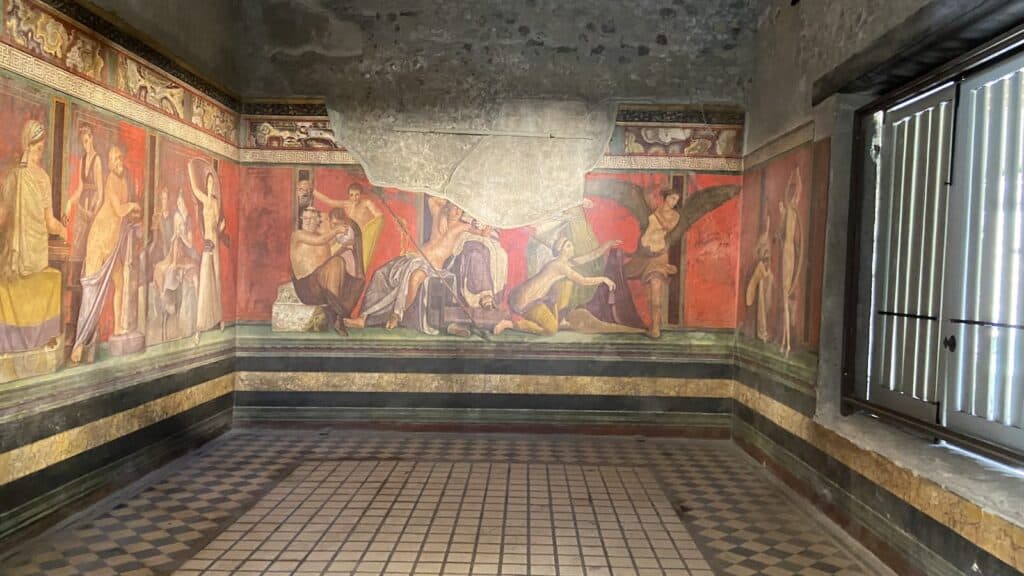
After such a shift, it becomes especially interesting to notice how little we have changed. Rich and poor houses, everyday needs, advertisements on walls, taverns — places where people like to gather. All of this existed back then as well.
In Pompeii, you can enter almost every house and compare it with modern life. The aesthetics and context are, of course, ancient, but the essence of human life remains surprisingly similar. Details, colors, and forms differ, but not the idea of everyday life itself.
The power of nature
After visiting Pompeii, it is impossible not to think about the power of nature. From almost anywhere in the city, you can see Mount Vesuvius — a majestic volcano whose eruption preserved the city for centuries. Before the catastrophe, it was much higher, but even today its presence is impressive.
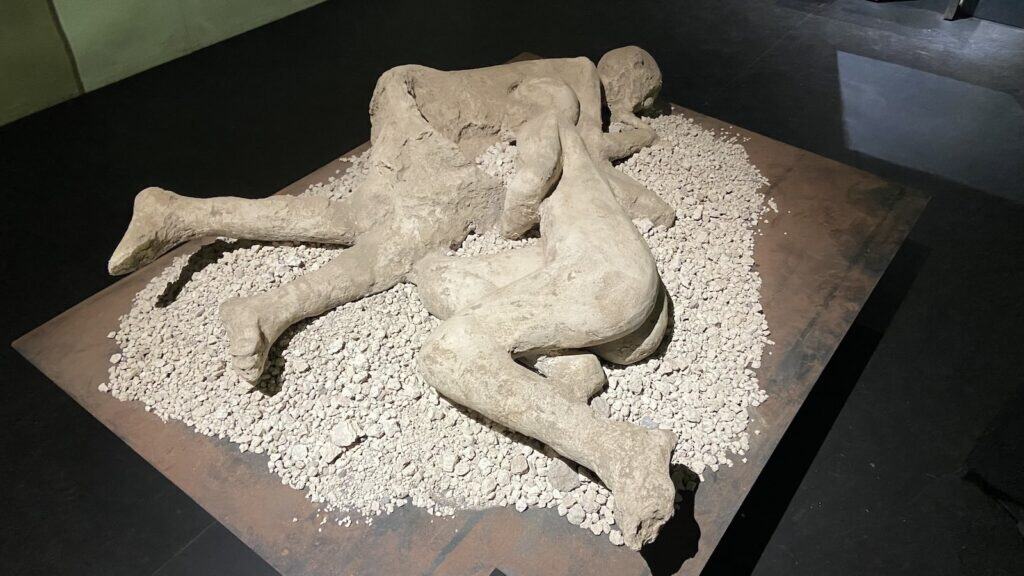
The scale of the disaster is hard to comprehend. A thick layer of ash covered the entire city in a very short time. Archaeologists later found cavities in the ash — tracesthe shapes of people frozen in motion, trying to hide or praying. The buildings survived, but the surrounding landscape changed dramatically due to earthquakes.
Outside time and context
Any journey is a change of context and a way to step out of everyday routine. This is important for staying in good shape and following an anti-burnout plan.
But a trip to Pompeii is also a way to step outside of time itself — a chance to see the past, compare it with the present, and calmly reflect on the future.