

Speed has become a symbol of the modern world. We are expected to work faster, make decisions faster, learn new technologies faster, constantly achieve something and move toward something else. Even rest is increasingly becoming another form of productivity, where people try to fit as much as possible into the smallest amount of time.
But for us, travel has always been an attempt to step outside of this rhythm. A chance to slow down, even for a short time, and feel how the inner pace of life gradually changes.
That is why we travel a little differently. We do not try to visit as many countries as possible or “complete” the maximum number of landmarks in a single trip. We are much more interested in staying longer in one place and trying to understand it more deeply.
A funny moment at the Prado Museum
A trip to Spain, Madrid, and the Prado Museum could easily become material for several separate articles. But in the context of this text, it is impossible not to remember one episode we experienced there.
We take museums very seriously, especially because my wife studied art history as one of her university degrees. We can spend a long time near a single painting or author — discussing details, stories, historical context, and meanings. And Prado is definitely a place where you can stay for hours. Walking through a museum like this in one visit is almost impossible. And honestly, unnecessary.
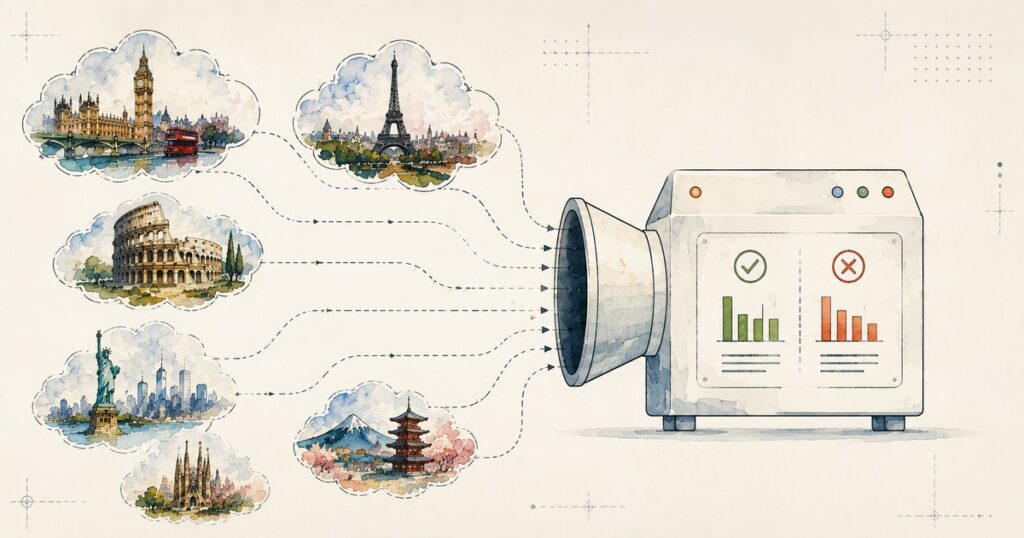
While walking through the museum, we noticed a couple literally running from hall to hall. At first we could not understand where they were rushing and why. But at one point they stopped near a painting we were quietly admiring, and suddenly everything became clear. They had a booklet in their hands with miniature images of famous artworks from the museum. They quickly found the current painting, put a checkmark next to it — and almost immediately rushed away again. The situation genuinely made us smile. We simply could not understand why art had turned into a checklist that needed to be completed as quickly as possible.
We feel almost the same way about travel. Of course, we could have visited far more countries and cities than we already have. But why? Just to place another checkmark and immediately move on? For us, there is too little real travel in that approach.
A city as an IT project
I am a software engineer. And there is one interesting thing about development: the longer you stay inside a project, the better you begin to understand how it actually works. And surprisingly, qualification level is not always the most important factor here. A developer who has spent ten years inside the same project will almost always write more appropriate and reliable code for that system than a new senior engineer who joined the team yesterday. Simply because over time you begin to understand the internal logic of the system. Travel works in a very similar way. The longer you stay in a city, the more you begin to feel and understand it.
- Project infrastructure — the country.
- Project architecture — the history.
- Project code — the people.
- Project features — the city’s landmarks.
And just like in IT, quickly running through the “features” is mostly the position of a regular user or consumer. Open the main screens, press a few buttons, and move on. But trying to understand the architecture, feel the rhythm, and разобраться in the “code” of the city and its logic — that already feels like real development.
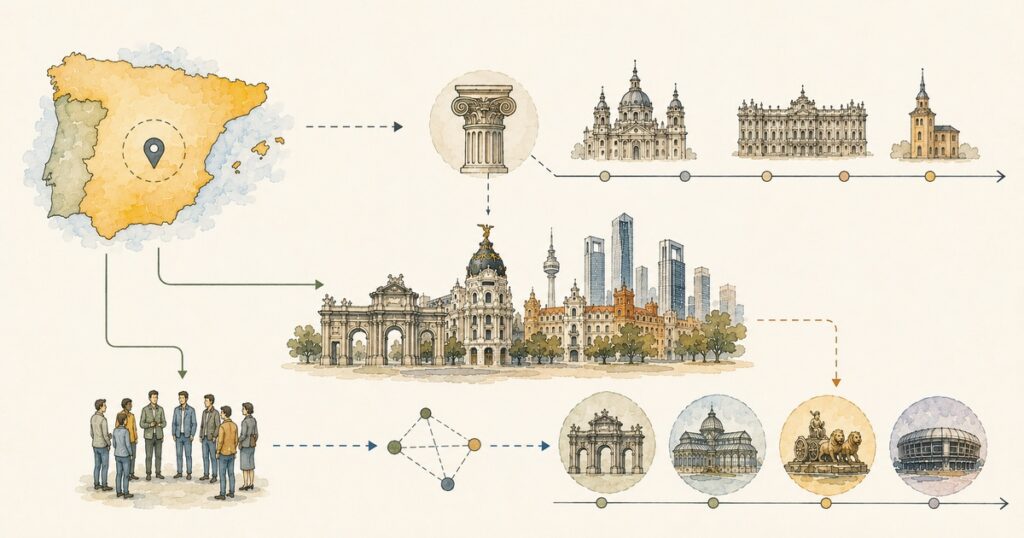
That is exactly why we enjoy staying in one place longer. Over time, the city stops looking like a collection of landmarks and starts feeling like a living system with its own character, atmosphere, and internal connections.
We return
And still, travel is something bigger than work. Over time I realised that this is where the comparison with IT projects finally ends.
Reading my own code from two years ago is already difficult sometimes. Not because it is bad, but because I have changed as a developer. Somewhere my approach improved, somewhere experience changed my perspective, and somewhere I simply began to see more elegant solutions.
Travel works differently. We love returning to places that genuinely felt right for us. Places where we feel calm, comfortable, and connected to the rhythm of life around us. For example, almost every summer we spend time in Larnaca, Cyprus. And the funny part is that we usually stay in the same apartments every time.
I am sure many people would find this approach boring. The sea is about 500 meters away through the city streets, the beach is public, and even the sand is not particularly impressive. Every day — the same streets, the same cafés, the same routes. But this is exactly where real rest begins for us.
Over time, the place slowly becomes “yours.” You start recognizing people. We already have conversations with locals in our international English. Maybe not perfect English, but at some point it no longer matters. The important thing is that we understand each other. And eventually you stop feeling like a tourist and begin to feel like a person temporarily living in another city.
Don’t rush your rest
After every trip we still have to return to normal life. Back to speed, tasks, deadlines, work, constant switching between different things, and the endless feeling that everything has to happen faster. But while we are traveling, we have a rare chance to step outside of that rhythm, even for a short time.
That is why we try not to turn rest into another competition. We do not try to “maximize” every day or collect as many checkmarks on the map as possible. What matters much more to us is entering the rhythm of a place and simply allowing ourselves to quietly live inside it for a while. Sometimes this means slowly walking down a familiar street. Returning to the same café again. Spending an evening without a plan. Or looking at the same city view one more time for no particular reason.
And honestly, we have never regretted this approach. Because over time you begin to understand that travel is not about the number of places you managed to visit. It is about the feeling that stays with you months or even years after the trip ends.